

WHY JESUS?
Got questions? Interested in finding out more? Let us point you in the right direction.
Did someone hand you a card or after a conversation you thought “why not find out more” and scanned the QR code or tapped their keyring? Maybe you've been wondering about faith for a while. Or maybe something's happened recently and you're asking bigger questions than usual.
Whatever brought you here, you're welcome. Take a look around and if you’d like to know more, get in touch with us. We’d love to help.


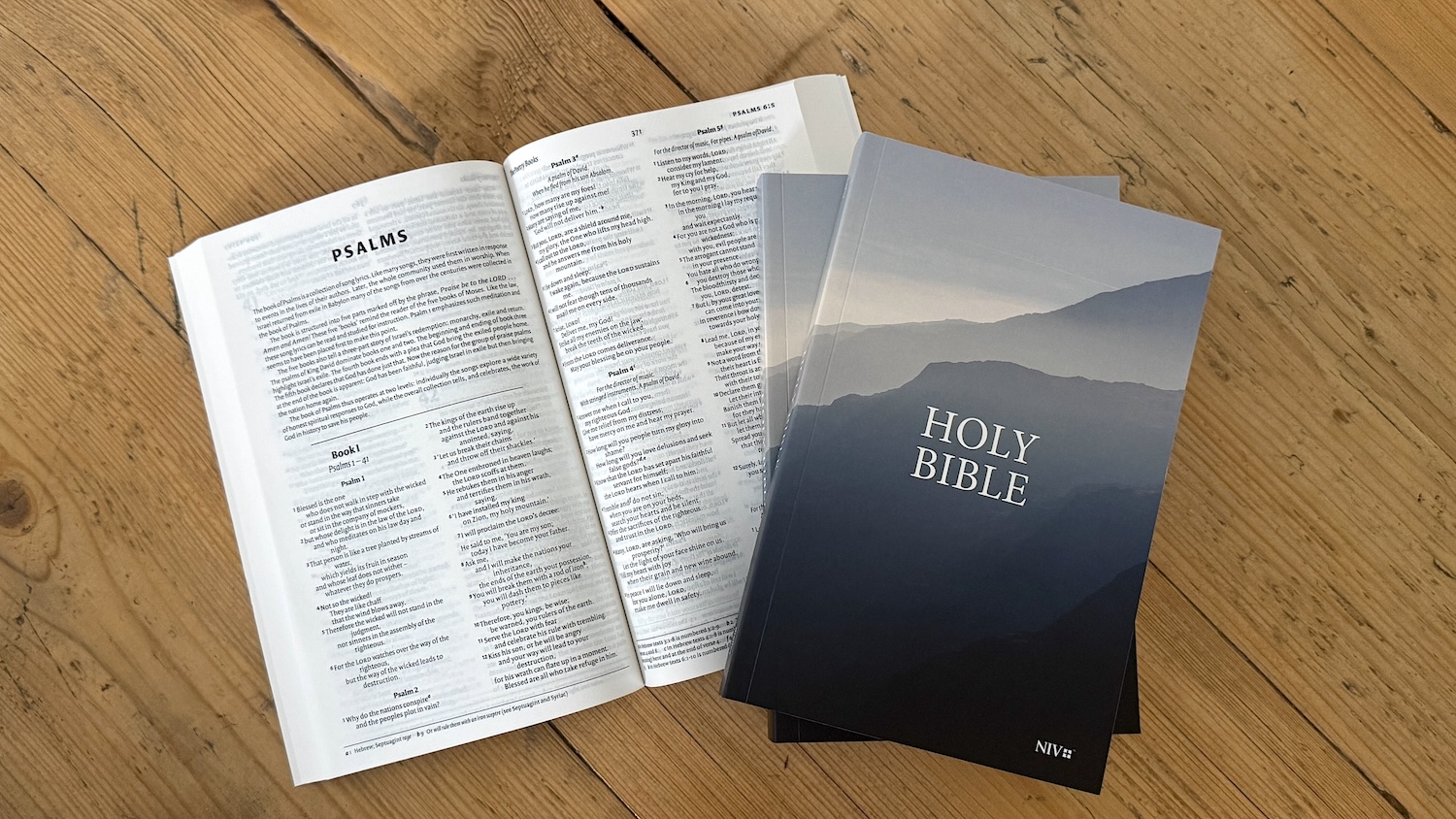
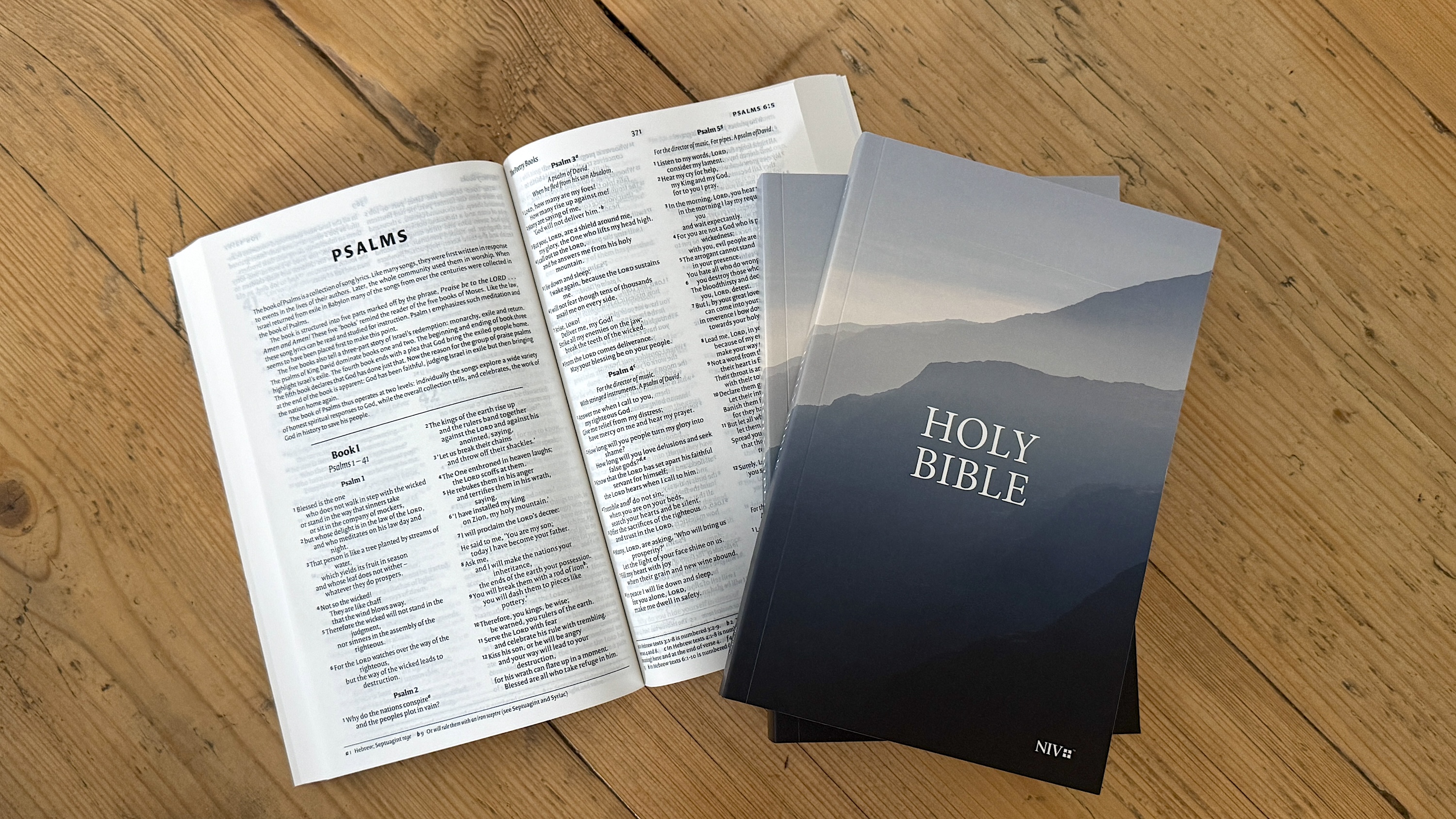
The Bible is the most read, translated and life-changing book in human history. Millions of people have picked it up during the hardest seasons of their lives and found something they weren't expecting: hope, clarity, and the sense that they're not alone.
If you're exploring faith, or even just curious, we'd love to send you a copy, completely free.
Just fill out your name and address in our online form and we'll post one out to you. No strings attached. It's yours to keep and explore.
One Bible per household · UK addresses only · Usually dispatched within a few days · Subject to availability.
Click any question to read a short, honest answer.
QUESTIONS ABOUT GOD
Q: Is God actually real?
A: It's probably the most honest question you can ask. The short answer is: you can't prove God the way you'd prove a scientific fact, but that's also true of most of the things we're most certain about, like love, justice, or whether the past actually happened. The case for God isn't based on blind faith, it's based on things like the existence of the universe, the fine-tuning of physics, the universal sense that some things are genuinely right and wrong, and the historical evidence for Jesus and what he did for us. We'd encourage you to explore rather than dismiss, you might be surprised where the evidence points.
Q: If God is good, why is there so much suffering in the world?
A: This is probably the question that stops more people from faith than any other, and it's a completely fair one. The Christian answer isn't a neat formula. It includes the reality that human choices cause enormous suffering. But the Bible tells us that God himself entered the pain of the world rather than sitting above it. He sent Jesus to suffer and die on our behalf for all the pain and suffering that sin has caused our world. And that story continues today. God meets us in our pain and he is able to help us walk through any dark valley if we will allow him to show us the way.
Q: Hasn't science disproved religion?
A: Not at all, though it's a common assumption. Science is brilliant at answering ‘how’ questions (eg. ‘how did the universe form?’, ‘how do cells work?’). It's much less equipped to answer ‘why’ questions (’why is there something rather than nothing?’, ‘why does anything have meaning or value?’). Many leading scientists are Christians. Faith and science aren't enemies, they're just asking different questions. We invite you to begin asking some ‘why’ questions for yourself and see where it might take you.
QUESTIONS ABOUT JESUS
Q: Who actually was Jesus?
A: Yes, the historical existence of Jesus is one of the best-attested facts of ancient history, accepted by virtually all historians regardless of their personal beliefs. He was a first-century Jewish teacher from Nazareth who was crucified under the Roman governor Pontius Pilate. The more interesting question is who he claimed to be, and what happened three days after he was buried. That’s what we can hopefully help you discover for yourself.
Q: Why do Christians say Jesus is the only way to God?
A: Because that's what Jesus himself said, and if he was telling the truth about who he was, it changes everything. Jesus said, “I am the way, and the truth, and the life. No one comes to the Father except through me.” (John 14:6) - That can sound arrogant from the outside, but Christians don't believe it because they think they're better than anyone else. They believe it because they think Jesus is who he said he was. The question worth asking is: was he right?
Q: Did the resurrection actually happen?
A: Christians believe so. It is a crucial part of our faith. Unless Jesus was raised to life, overcoming death, then he can not be who he said he was. The historical case for it is stronger than most people realise: the tomb was empty (even opponents didn't deny this), hundreds of people claimed to have seen Jesus alive, and the disciples were so convinced they died for it. People die for things they believe, but very rarely for something they know to be a lie.
QUESTIONS ABOUT THE BIBLE
Q: Is the Bible reliable?
A: It was written by human hand, that's never been the claim against it. The question is whether God worked through those humans to communicate something true. Christian’s believe the Bible was ‘God-breathed’ - written through humans but guided by the Holy Spirit. On the question of reliability, the Bible is the most scrutinised document in human history and has held up remarkably well. The New Testament manuscripts number in the thousands and are far more numerous and closer to the originals than any other ancient text we trust.
Q: I've tried to read the Bible and found it confusing.
A: Start with the Gospel of John, it's near the back of the New Testament and was written specifically for people asking exactly the questions you're asking. It's short, readable, and gets straight to the point. If you'd like a physical copy, we'll send you one for free, just send us your details.
Q: Where do I even start?
The Bible isn't one book - it's a whole library. 66 books written across thousands of years, covering history, poetry, letters, prophecy, and biography. That's why you don't need to read it from cover to cover. Check out our helpful guide to reading the Bible for those who have never read it before.
QUESTIONS ABOUT THE CHURCH
Q: Do I have to have everything figured out before I can come to church?
A: Absolutely not. Church isn't a place for people who've got it all together, it's a place for people who are honest enough to admit they haven't. You don't need to believe anything in particular to walk through the door. Come and see. Ask questions. You'll be welcomed exactly as you are.
Q: Isn't Christianity just a crutch for weak people?
A: It's a fair challenge. But think about it the other way: if Christianity is true, then leaning on it isn't weakness, it's just being honest about reality. People who've shaped the world most radically through their Christian faith like William Wilberforce and Martin Luther King Jr., weren't exactly weak. The question isn't whether faith gives you strength. It's whether the thing you're leaning on is actually true.
Q: I've been hurt by church before.
A: Bad experiences of church are real, and they matter, and we're genuinely sorry if that's part of your story. Not every church is the same though. We're not perfect, and we won't pretend to be. But we're a community that tries to be honest, kind, and open, where people matter more than performance. You'd be welcome to come once, no obligation, and make up your own mind.
Q: Can I become a Christian even if I've done terrible things?
A: That's quite literally the point of the whole thing. As Jesus was being crucified, a criminal who was being crucified next to him, called out and asked Jesus to remember him when Jesus entered into his own Kingdom. In that moment the criminal accepted who Jesus was, but his life was about to end and could make no recompense for what he had done. Jesus accepted his words though and told the criminal, “today you will be with me in Paradise”. Salvation is a gift we can all received no matter what we have done. There is nothing we can do either, to earn what Jesus gives. The message of Jesus isn't "clean yourself up and then come." It's "come, and follow me." His grace is sufficient for us.

Not a reader? No problem. Here are some short videos from people who explore faith, doubt, history, and the big questions with honesty and intelligence. Pick a topic that interests you and start there.
Saying yes to Jesus is simple. If you would like to have a relationship with God and you are ready to begin your own faith journey, here is a simple prayer that you can pray.
Jesus
I open my heart to you today
I am a sinner in need of a saviour
Forgive me of my sin
And fill me with your Holy Spirit
Help me turn from my old ways
And give me a new life
I choose to follow you
As my Lord and King
Amen
If you’ve prayed this prayer - let us know. We’d love to help you take your next step and get you connected with other Christian’s who can support you on your journey. Just simply drop us your name and email and share what happened.




Copyright © C3 LIFE Church in Leeds 2026 | Privacy Policy | Cookie Policy